Send Automated SMS from Salesforce – The Process and Benefits
If you already use Salesforce to manage leads, contacts, customers or cases, you may want to send SMS or WhatsApp messages without manually copying phone numbers or moving between different systems.
This can be achieved by connecting SMS and WhatsApp communication with your Salesforce records and workflows.
Sending messages directly from Salesforce can be useful when you need to follow up leads quickly, remind customers about appointments or keep people updated about changes to their records.
With the right Salesforce SMS solution, you can send automated SMS messages from Salesforce whenever something happens in your Salesforce records.
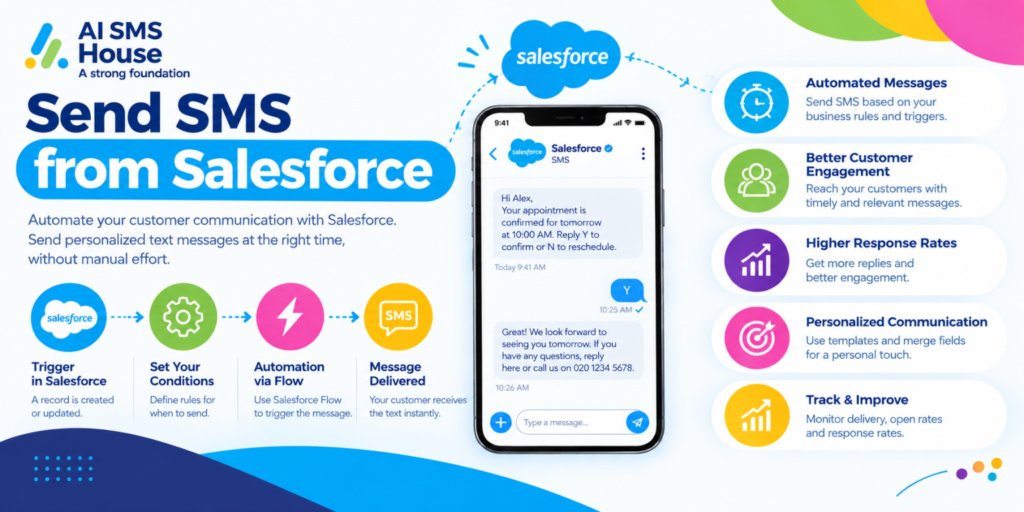
You can set these processes up using Salesforce Flow, allowing you to automate routine messages while keeping the communication connected to the relevant Salesforce record.
How to Send Automated Text Messages from Salesforce
1. Connect SMS with Salesforce
First, connect Salesforce with an SMS messaging solution such as AI SMS App. This allows you to send SMS or WhatsApp messages from Salesforce records, including Leads, Contacts, Accounts, Cases and other Salesforce objects.
Once connected, your team can manage SMS communication without relying on a separate messaging system.
2. Create SMS or WhatsApp Templates
You can create templates for messages you send regularly, which helps control consistent and approved messaging.
Salesforce fields can be used to personalise each message. This means you can automatically include information such as the customer’s name, appointment date or case reference.
3. Set Up Salesforce Flow
The next step is to decide when you want the SMS or WhatsApp message to be sent.
Using Salesforce Flow, you can create conditions such as:
- When a new Lead is created.
- When a Contact is added.
- When a Case status changes.
- When an Opportunity reaches a particular stage.
- When an appointment is created.
- When a specific Salesforce field is updated.
4. Send the SMS Automatically
Once the conditions are met, the Flow can trigger the message automatically to the relevant phone number.
You do not need to manually find the contact, copy their number or type the same message again.
5. Track SMS and WhatsApp Message Activity
You can keep the messaging activity connected to the relevant Salesforce record. This gives your team visibility of what has been sent and helps them understand the latest customer communication.
How Salesforce SMS Automation Helps Your Business: Common Use Cases
Automated messaging can save your team from repeating the same communication throughout the day. More importantly, it helps you contact customers in a convenient channel at the right time.
Lead Follow-Up
When a new lead enters Salesforce, you do not always want them waiting for a sales representative to respond.
You can use an automated message to:
- Confirm that you received the enquiry
- Thank the person for getting in touch
- Share a booking link
- Provide the next steps
- Remind a sales representative to follow up
This gives the customer an immediate response while your sales team prepares a more personal follow-up.
Appointment Reminders
If your business manages appointments, you can automate reminders directly from Salesforce.
This can help reduce missed appointments and means your staff do not have to send each reminder manually.
For example:
- Appointment confirmation when it is booked.
- Reminder one day before the appointment.
- Reminder a few hours before the appointment.
- Follow-up message after the appointment.
Case Updates
When a Salesforce Case changes status, you can automatically trigger an SMS to keep the customer informed.
For example, you could send a message when a case is:
- received
- assigned
- requires more information
- updated
- resolved
Instead of your team checking records and sending individual messages, the notification can be triggered by the Salesforce automation.
Customer Follow-Ups and Retention
You can create an automated follow-up after a specific Salesforce activity.
For example, after a sales call, you could:
- send a thank-you message
- provide a useful link.
Automated texts are not only useful for new leads. You can also use them after a sale or during ongoing customer relationships.
For example, you could send a thank-you message after an Opportunity is marked as Closed Won, followed by a useful follow-up message at a later stage.
Payment or Order Updates
If your Salesforce process tracks payments or orders, you can trigger SMS notifications when the relevant record changes.
This can help keep customers informed without requiring your team to send every update manually.
Why Use Automated SMS in Salesforce?
The main benefits include:
- Save time: Reduce repetitive manual texting.
- Respond faster: Send an immediate message when a customer takes action.
- Keep customers informed: Provide useful updates at the right time.
- Improve follow-up: Make sure important messages are not forgotten.
- Keep communication connected: Link messaging activity with Salesforce records.
The biggest benefit is that SMS and WhatsApp messaging becomes part of the process you already manage in Salesforce.
Start Sending Automated SMS From Salesforce With AI SMS App
When you send automated text messages from Salesforce, you can make everyday customer communication quicker and easier to manage.
From lead follow-ups and appointment reminders to case updates and customer notifications, you can build SMS and WhatsApp into the processes your team already uses. Your staff can spend less time sending routine messages and more time dealing with customers who need personal attention.
AI SMS App from Application House is the solution to help you achieve this. You can connect messaging with Salesforce records and use automation to send messages based on customer or business activity.
If you want to explore the Salesforce messaging app, you can view AI SMS App on Salesforce AppExchange.