Is Texting HIPAA Compliant? What Healthcare Teams Need to Know
Text messaging is becoming an important communication channel for healthcare organisations – appointment reminders, follow-ups, medication reminders and feedback can all be done via the convenient method of texting.
However, its key that when protected health information (PHI) is involved, providers must consider how the data is handled due to HIPAA (Health Insurance Portability and Accountability Act) rules.
HIPAA doesn’t prevent healthcare organisations from contacting patients via text, but there are safeguards that must be in place to remain compliant.
For providers using Salesforce, choosing the right messaging provider is important. A Salesforce native SMS app can ensure conversations, patient data and consent records are all stored in one place.
In this blog, we explain the rules for HIPAA compliant texting, the considerations, and what to look for when sending messages from Salesforce.
Is Texting HIPAA Compliant?
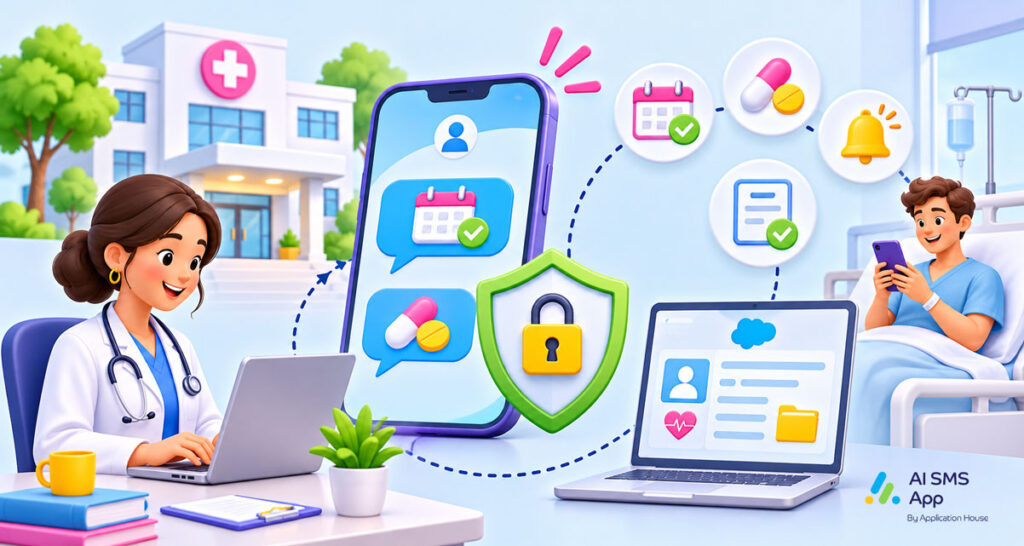
The requirements set out by HIPAA apply to electronic communications, including text messages, when they include protected health information.
Texting can be used in a HIPAA compliant way – healthcare providers are permitted to send texts, but must limit the information disclosed to protect patient privacy.
Not all text messages carry the same level of risk. For example, an appointment reminder message could disclose very little information, depending on how it’s worded. However, a message containing a diagnosis, test results, or treatment details could contain sensitive information.
This means that texting doesn’t always violate HIPAA rules, but simply using a HIPAA-compliant messaging platform doesn’t mean you are covered.
As a healthcare provider, you need to consider what information is necessary to communicate, who is receiving the message, and if the messaging technology gives you the correct security protection.
What Are The HIPAA Rules For Texting?
1. Consider protected health information
PHI can include but isn’t limited to; patients name, medical history, diagnosis and treatment place. Sending a message with an appointment including the provider can disclose the nature of treatment. You should avoid including unnecessary information in messages.
2. Apply appropriate safeguards
Messages should be encrypted, access should be controlled, and audit logs of who sent what should be stored.
Healthcare teams need written guidelines on the policy, so they are clear what can and can’t be sent, and what to do in the case of a policy breach.
3. BAA needs to be in place
A business associate agreement (BAA) is an important part of HIPAA compliance. Any text messaging solution providers will be considered a business associate under HIPAA rules.
It’s worth noting that using Salesforce doesn’t remove this requirement – healthcare providers should confirm their Salesforce service, and any associate vendors are covered by necessary agreements.
4. Consent and opting-out
Consent from each patient is a must-have before sending any text message. Consent and opt out records need to be stored and reliably enforced. You should also check that patients contact details are correct, and they haven’t requested alternative communication methods.
There will be other federal and state requirements that also apply to texting – such as quiet hours, 10DLC registration, and maintaining detailed records – HIPAA isn’t the only compliance consideration.
Is Texting From Salesforce HIPAA Compliant?
Salesforce can be HIPAA compliant – it depends on the Salesforce services being used, the environment configuration, and any third-party services involved.
Sending messages from Salesforce is not automatically HIPAA compliant text messaging simply because your Salesforce environment is compliant – you need to abide by all the HIPPA rules for texting.
Salesforce provides HIPAA related compliance information and offers a Business Associate Addendum (BAA) for applications.
Using a Salesforce native SMS app means messages and attachments are stored in your Salesforce environments, which falls under your BAA with Salesforce.
Key advantages of a Salesforce native app (AI SMS App)
- All communications are stored within the patient record and data remains stored in Salesforce
This means healthcare teams can apply data governance processes, and control access permissions and record management. - Manage opt out preferences in Salesforce
Consent preferences are stored in the patient record. If a patient opts out, workflows in Salesforce can set to instantly update their preferences and stop future messages being sent. - Salesforce access controls applied to messaging
Patient records should be restricted to user’s roles, including the ability to send messages and see conversation history. AI SMS App is native to Salesforce so it follows the roles you have set up – if a user can’t see a patient record, they can’t see the messages. - Compliant messaging infrastructure
One of the main considerations with SMS apps can be what happens when a user or workflow clicks send. Even though the messages and data are stored in Salesforce records, SMS delivery involves an external infrastructure. With AI SMS App, SMS messages are sent through a HIPAA-eligible service.
Choosing a HIPAA Compliant Salesforce Texting Solution
When evaluating apps for HIPAA compliant messaging, there are several key things to consider. Here are some questions to ask.
Salesforce integration
- Is the app native to Salesforce?
- How does it access patient records?
- Where are messages stored?
- Is data transferred to external systems?
Data storage and processing
- Where are message content, delivery record stored?
- Does any third party retain information and for how long?
Business Associate Agreements
- Is the app covered by an appropriate BAA?
Security access and controls
- Can access be restricted to authorised users?
- Are audit capabilities available?
Consent and opt-out management
- Can consent preferences be recorded and enforced?
- How are opt outs handled?
Audits and record keeping
- Are messages associated with the relevant Salesforce records?
Use HIPAA Text Messaging From Salesforce to Improve Your Healthcare Communications
The benefits of sending healthcare text messages must be balanced with the necessary safeguards for HIPAA secure texting.
If you are using Salesforce, a native messaging app can be a practical way to communicate securely with patients. Message data remains stored in Salesforce, conversations are stored against Salesforce records and opt-out preferences are also managed on the record.
Healthcare organisations should be sure that:
- Their Salesforce configuration is setup to ensure compliance
- The messaging application they choose, as well as any third-party services involved all meet specific HIPAA requirements before sending text to patients with PHI.
To discuss your requirements and set up in more detail for peace of mind, reach out to us today for more information and to arrange a demo.