B2B SMS Marketing: A Guide for Salesforce Teams
B2B marketing often involves long sales cycles, multiple decision makers, and a series of touchpoints before a prospect is ready to buy. Email, phone calls and LinkedIn will all have a role to play in your marketing strategy, but often a short, direct text can help to move the conversation forward.
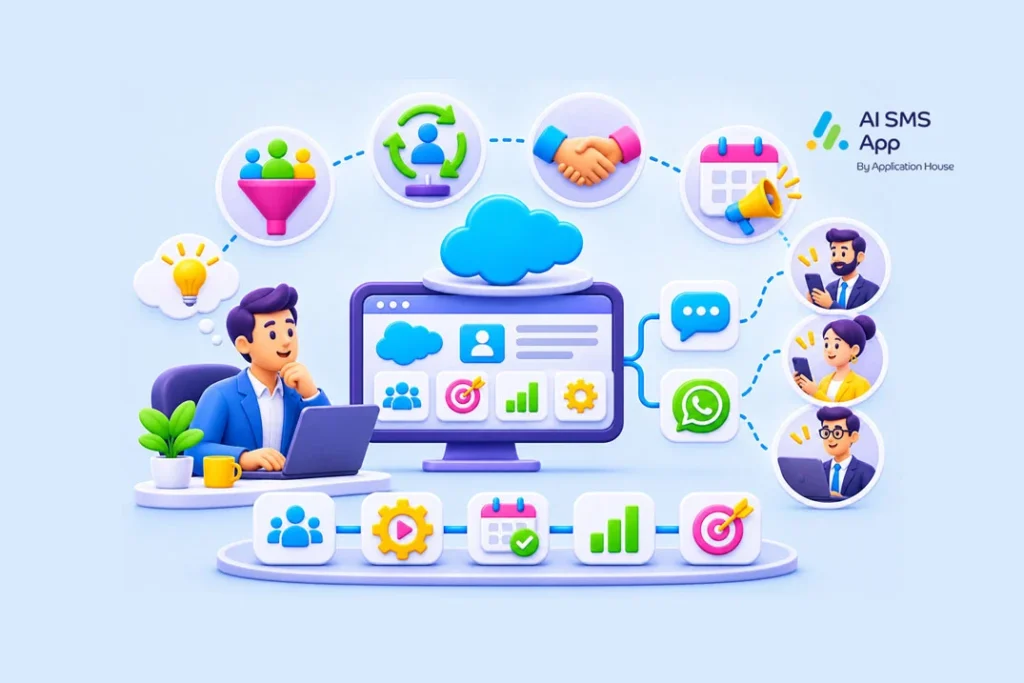
B2B SMS marketing can help you to follow up with new leads, promote events, and nurture existing customers. It gives your B2B business another way to reach customers.
When SMS is integrated with Salesforce, it’s easy to connect conversations with customer data, campaigns and workflows that are already used by your marketing team.
In this guide, find out how B2B SMS marketing works, how to develop an effective SMS marketing strategy, how to use automation, and the things for Salesforce users to consider when choosing a B2B SMS platform.
What is B2B SMS Marketing?
B2B SMS marketing uses text or WhatsApp messages to communicate with business customers and prospects.
Unlike consumer SMS marketing, B2B messaging generally supports a longer customer journey. Messages might include invites to events or webinars or follow up after product demos.
Some common use cases of SMS marketing for B2B include:
- Lead generation – encouraging prospects to take action, such as registering for an event, booking a demo or meeting, or requesting information.
- Lead nurturing – keep potential customers engaged between sales conversations
- Sales outreach – follow up with prospects after they have expressed interest
- Event marketing – send promotion, attendance confirmations, reminders and follow ups about events
SMS is best used when the message can be concise and actionable. In some cases, a short text can prompt a response better than a lengthy email. Reported average response rates are 45% for SMS, compared with 6% for email.
Why Use B2B SMS Marketing With Salesforce?
Many B2B businesses already use Salesforce to manage leads, accounts, contacts, opportunities, and customer relationships.
Adding SMS into the CRM system you already use offers many benefits compared to managing B2B SMS in a separate system.
- Personalise messages using Salesforce data
- Automate messages with existing workflows
- Connect marketing activity with sales follow-up
- Use SMS as part of your wider marketing strategy
How To Build A B2B SMS Marketing Strategy
A successful B2B SMS marketing strategy starts with a clear purpose. Decide what you want to achieve and how SMS will support your existing marketing activities.
1. Define your objectives
Deciding your objective is the starting point for any strategy. Identify the outcome your business needs SMS to deliver. It might include:
- Generating registrations for events
- Increasing attendance at events, or reducing no-shows
- Encouraging prospects to book a meeting or demo
- Speeding up the sales cycle
- Re-engaging with cold leads
- Supporting renewal or cross-selling
Objectives need to be measurable, and will help you define your audience, message content and timing. One campaign won’t meet all objectives.
2. Segment your audience in Salesforce
Once the objective is decided, you need a clear audience that are relevant to the campaign you’re building. Not all customers should receive the same message. You can use CRM data to segment the audience by filters such as:
- Lead or opportunity stage
- Industry or company size
- Prior event attendance
- Job role
- Product interest
- Existing customer status
Segmentation makes your messages relevant and reduces opt-outs. Then segmenting process should also include consent and contact-preference options.
3. Write concise, relevant messages
SMS marketing messages should be clear, short and actionable. Lengthy product or service information should be kept for email or other appropriate channels. SMS should include:
- Your identity as the sender
- Clear reason for the message, with a relevant detail or benefit
- One call to action
Personalisation is important, and can be more than just including the recipient’s name – relevant info about their interests or relationship with you can add value.
4. Plan the customer journey
B2B SMS marketing should fit into your wider customer journey and marketing activities. A new lead might book onto a webinar from a marketing email and need an SMS reminder. Or an existing customer might get a text about a service update. Things to consider include:
- What triggers a message?
- What happens if the recipient responds?
- Should a follow-up be triggered if there’s no response?
- When should a sales rep take over?
- When does the journey end?
For Salesforce users, this is where a native app can be beneficial – CRM data and automation in the platform you already know and use is valuable.
5. Measure performance and make improvements
As with all elements of your marketing strategy, your SMS activity should improve as you get insights into what works. What you measure will depend on your objectives, but some metrics to consider are:
- Delivery rates
- Open rates
- Response rates
- Click through rates
- Conversions
- Opt out rates
Whatever metrics work for your campaign, using the insights you collect is the most important part. Not only can you see how SMS contributes to your wider marketing activity, but you can see what message types work well, and do more of them, and what messages see a lot of opt-outs, so you know what to avoid.
How To Automate SMS Marketing For B2B
Using automation is a useful way to incorporate SMS into existing marketing processes. You don’t need employees to send every message manually – a Salesforce-native SMS app lets you build text messaging into existing workflows.
Here’s 3 ways you can use automation:
Trigger messages from Salesforce activity
Salesforce Flow can be used to initiate sending a message when specific conditions are met. For example, a message could trigger when:
- A lead reaches a defined stage
- A prospect registers for an event
- An appointment is approaching
- A customer needs a renewal reminder
Build multi-step messaging journeys
If a campaign requires several stages with different messages, Salesforce automation can help you manage the conditions you set. For example, you don’t want to send event invitations to someone who has already registered. You could set up messages for an event including:
- Event invitations
- A confirmation after registration (no further event invitations to registered contacts)
- A reminder 24 hours before the event
- A follow up after the event (with specific messaging to those who did and didn’t attend)
Connect responses to the next action
SMS is a two-way marketing channel, so it’s likely your customers or prospects may respond to you. This is one of the reasons it’s vital to opt for a Salesforce messaging app that can easily handle inbound messages, such as AI SMS App, where inbound messages are automatically associated with the relevant record.
You want automation activities to support your team and not remove the human element that’s so important in B2B marketing.
SMS Marketing Best Practices
Follow these best practices for your B2B SMS marketing strategy:
Consent is key
Before sending any marketing texts, you need to make sure you’ve got consent to send them. It’s vital to learn about and adhere to the compliance rules and regulations in your region to avoid fines and a bad reputation.
In the US, TCPA rules apply, and in the UK GDPR and PECR regulations need to be adhered to.
For B2B texts, it’s best to always have documented consent, and an easy way for contacts to opt out.
Keep messages short, focused and relevant
Remember that SMS is meant to compliment your B2B marketing strategy, not take over it. SMS is not the right channel for every message. Use texts or WhatsApp messages for concise updates, reminders, and calls to action.
Ensure you segment your Salesforce data appropriately, so you only send messages to those who are likely to be interested in them. You’ll get better results from doing this, rather than sending the same campaign to every lead or contact in your database.
Keep timing and frequency reasonable
Too many messages can become intrusive and damage trust, particularly in a B2B relationship. Consider any other outreach activity, such as email, alongside the frequency of SMS messages, so they are balanced and not overwhelming.
Make opt out straightforward
You need an easy way to handle opt outs. If a contact asks to be removed from marketing messages, you need to honour that request straightaway.
Test and optimise
Monitoring your B2B SMS marketing results will give you an insight into what’s working and what’s not. Testing different wording, calls to action and send times can help you optimise the best approach for your business and the different segments you market to.
A high response rate is good, but does that translate into qualified leads? Evaluate against your initial goals, as well as standard metrics such as open and click thorough rates.
How To Choose A B2B SMS Marketing Platform For Salesforce
B2B SMS marketing works best when it’s part of existing CRM processes, not a disconnected marketing channel.
If you already use Salesforce, opting for an app that’s integrated will let you manage messaging alongside your existing CRM data.
Some considerations for a B2B SMS platform:
Native Salesforce integration
Look for a platform that integrates natively with Salesforce and can support the workflows you already use. An integrated app will also mean you can personalise messages with your data.
- Can you send messages from all types of relevant record, not just lead and contact?
- Can you access conversation history in the context of the customer relationship?
Automation and workflow integration
Check that the SMS app you choose can support you with any automation you need.
- Can you trigger messages through Salesforce Flow?
- Can responses inform subsequent actions?
Two way SMS marketing
Marketing often requires your prospects to reply – it’s not one way. If someone responds asking a question or for information, you want to be able to reply to them.
- Does the app support incoming responses and handle them in the way you need?
- Can you see 1:1 conversations on any record?
Reporting and visibility
You want to easily see how your campaigns are performing, so the types of metrics available are important to consider.
- Can you see delivery information? If a message has been sent, delivered, and read?
- Can you see who sent the message, if it was a user, flow, Agentforce Agent or Bulk send?
Consent and compliance
Compliance is a vital aspect of B2B SMS marketing. You’ll want to be sure that the app you choose can handle consent in a way that supports your compliance processes.
- Can a record opt out on based on message type, e.g. marketing, informational, or system messages?
- Can opt out be configured to the objects or fields you need?
SMS and WhatsApp
If WhatsApp is part of your communication strategy, you’ll want to consider if you can use both channels through one app.
- Can you use SMS and WhatsApp messaging?
AI SMS App is the best SMS marketing platform for B2B. It’s the ideal option for businesses looking to add on messaging capabilities to Salesforce and can handle all the considerations above.
Make B2B SMS Marketing Part Of Your Strategy
Sending B2B SMS messages give your marketing team another way to engage with prospects, support lead generation and maintain customer relationships.
You can add value by using SMS purposefully – sending relevant, short, action-driven messages.
For Salesforce users, integrating SMS into your CRM makes your SMS marketing strategy easy to manage. Customer and lead data can personalise messages, and automation can trigger at the right moment.
Want to make SMS part of your Salesforce marketing workflows? AI SMS App is a salesforce-native SMS and WhatsApp platform that can help you achieve all the benefits detailed in this guide.